Apartment search checklist
Apartment Viewing Checklist: What to Check Before You Sign
A room-by-room renter checklist for water, pests, noise, safety, utilities, lease promises, and documentation before paying a deposit.
Updated July 28, 2026 · 10 min read
By Apartmentwise · Editorial methodology
The short answer
Visit in person when possible, test ordinary fixtures with permission, inspect rather than diagnose, ask for every promise in writing, and never let application urgency replace a careful lease review. A clean staging job cannot prove that plumbing, heat, noise, pests, or management response will be reliable.
Use every sense
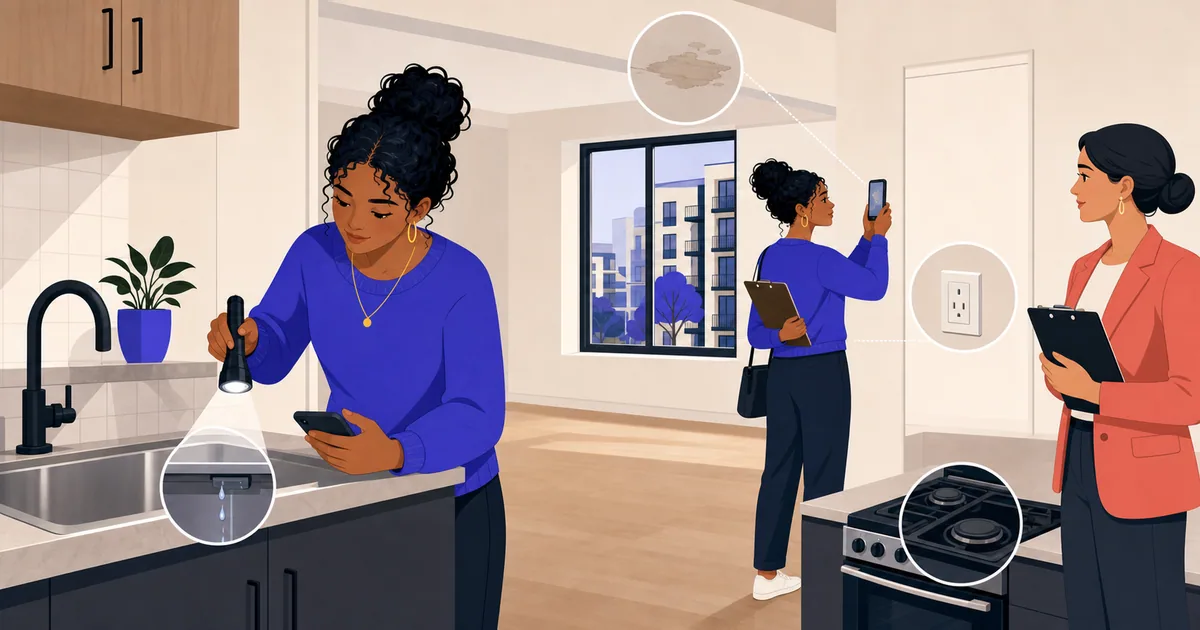
Look for stains and pest signs, listen for building noise, and notice musty, smoke, gas, or fragrance-heavy odors.
Test ordinary functions
With permission, run taps, flush toilets, open windows, test locks, and confirm appliances and outlets without dismantling anything.
Get promises in writing
A planned repair, included utility, parking space, or move-in concession should appear in the lease or a signed addendum.
Before the viewing
- Verify the listing address, agent, owner or management company through independent records.
- Ask which utilities are included, the application criteria, all fees, and the earliest available lease.
- Bring a phone, notes, a small flashlight, a charger you already own, and a tape measure.
- Visit the block at a second time of day when practical.
Check local rules before acting
Do not send money, identification, or financial information through an unverified listing. Rental scammers often create urgency or claim they cannot show the unit.
Room-by-room checks
- Kitchen: run hot and cold water, look beneath the sink, check appliance condition, cabinet pest signs, and ventilation.
- Bathroom: check water pressure, hot water, drainage, toilet stability, fan airflow, ceiling stains, and soft flooring.
- Bedrooms and living areas: open permitted windows, test locks, look for water marks, drafts, outlets, radiator damage, and pest evidence.
- Common areas: inspect entry security, mail and package handling, trash, laundry, stairs, elevators, alarms, lighting, and posted management information.
Questions that reveal operations
- How are emergency and routine repairs submitted, and can the manager show the portal or phone number?
- Who controls heat or cooling, and what equipment belongs to the building?
- What are the rules for guests, roommates, pets, smoking, noise, deliveries, moving, and window AC units?
- Are there open violations, recurring pest treatments, planned construction, or utility interruptions?
- Exactly which condition issues will be corrected before move-in, by what date?
Before paying or signing
Read the complete lease and every incorporated rule. Compare the unit number, rent, deposit, utilities, dates, concessions, renewal terms, and promised repairs against the listing and conversation.
- Keep a copy of the signed lease and every receipt.
- Do not rely on a verbal promise.
- Ask for time to review unfamiliar clauses or obtain local tenant advice.
- Walk away from pressure to pay before identity, authority, and the unit are verified.
Keep planning
Related renter guides

When should I apartment hunt?
Choose a search window based on whether you value more listings, lower competition, or negotiating leverage.
Open guide →
How much rent can I afford?
Estimate a practical monthly rent ceiling using both an income guideline and your real monthly budget.
Open guide →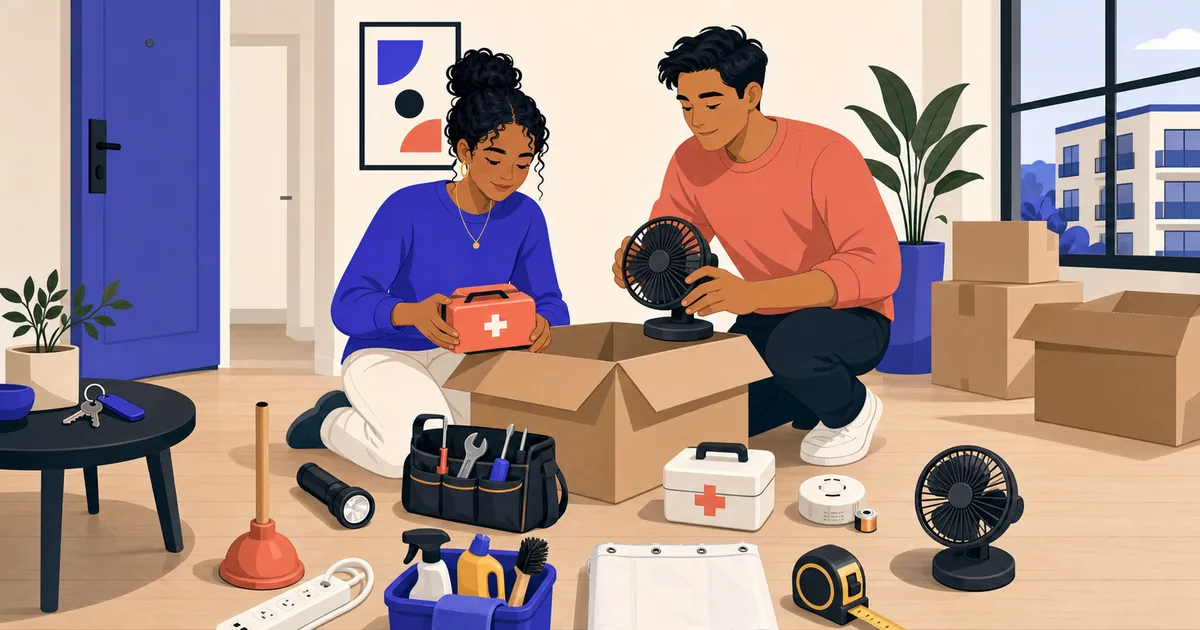
What should a first-time renter buy?
A practical first-apartment checklist focused on safety, small emergencies, food storage, laundry, and renter-friendly upkeep.
Open guide →