Small Spaces
A bedside setup without a full nightstand
Start with what you reach for, then test an existing surface, a narrower table, or a clear floor beside the bed.
A bedside table has a small job: hold the few things you want to find without getting out of bed. That does not always require a cabinet, matching furniture on both sides, or another purchase. First separate what you need within reach tonight from what merely lives in the bedroom. Then test a place for that smaller group. The useful answer might be the edge of an existing surface, a genuinely narrow table, or no extra furniture at all.
Give the landing spot one short list
Start with the things you actually reach for: perhaps glasses, a phone and the book you are reading. A spare charger, unopened post and the next five books can have another home. Put the chosen items together on a sheet of paper to see the space they occupy.
IKEA’s nightstand guide distinguishes a small phone-sized landing spot from a larger top needed for a lamp and other belongings. Use that as a contents check. A small table stops being useful the moment its lamp base leaves nowhere to put the book.
Source: IKEA US: Nightstands: choosing surface area for bedside belongings ↗
Try an existing surface first
If a flat-topped side table or the near end of a dresser is already beside the bed, clear just the part you can reach. Sit and lie in your usual positions and try setting down your glasses and book. A surface that requires a twist or a long lean is not your bedside landing spot, even if it looks close in a photograph.
Borrowing a table from another room can be a useful trial, provided it does not leave that room without a surface it needs. Use a stable piece on a level floor. Skip improvised stacks of boxes or books as a permanent tabletop.
Measure the space the furniture will really occupy
Measure from the outside of the bed frame, not just the mattress, to the nearest obstruction. Note anything that projects into that space: a baseboard, a radiator, a door handle or a cupboard door. Compare the complete proposed table, including a top or legs that extend beyond its main body.
For a made-up example, a 12-inch-wide table in a 16-inch-wide recess leaves 4 inches of spare width. That subtraction proves only that the two widths fit; it does not provide walking space, establish a safe clearance or show that a drawer will open.
Mock up the proposed width and depth with paper on the floor. With the room as you normally use it, get into bed, get out again and open nearby storage. Check the duvet hanging over the frame too. If the table would occupy the route you use, choose another position or leave it out.
Let a narrow table earn its place
A narrow freestanding table makes sense when your essential items have no reachable home on furniture you already own. Compare its usable top with the paper layout of your belongings. Check the height by trying a temporary surface at a similar level rather than choosing a universal height from a room picture.
Choose a drawer only if you have a specific job for it and can open it from the side of the bed. An open lower shelf may be enough for the current book, but it still needs room for your hand to retrieve it. Extra storage is useful only when you can use it without moving the table.
A clear floor is a complete option
If every candidate crowds the route, stop trying to fit a table. Put the book and phone on an existing dresser across the room and accept that you will stand up to retrieve them. This trades immediate reach for an easier room to move through; it is a choice, not a failed layout.
If a bedside lamp is what drives the purchase, decide where the light can live before buying the surface. Our reading-light guide can help you think through the seat, book and light together. Do not squeeze in a table that works only after the lamp or everyday belongings are moved elsewhere.
Compare the tradeoffs
| Option | Useful for | Check first |
|---|---|---|
| An existing reachable surface | A few essentials that fit on a stable table or dresser already beside the bed. | The height or reach may be wrong; try it from bed before committing. |
| A narrow freestanding table | A real gap with enough usable top for the items you need at night. | Adds a footprint and a purchase; drawers, bedding and access still need testing. |
| No extra bedside furniture | A room where a surface would occupy the route or block storage. | Essentials live on existing furniture and may require getting out of bed. |
These are possible arrangements, not tested room plans. Check reach, movement and access with your own belongings.
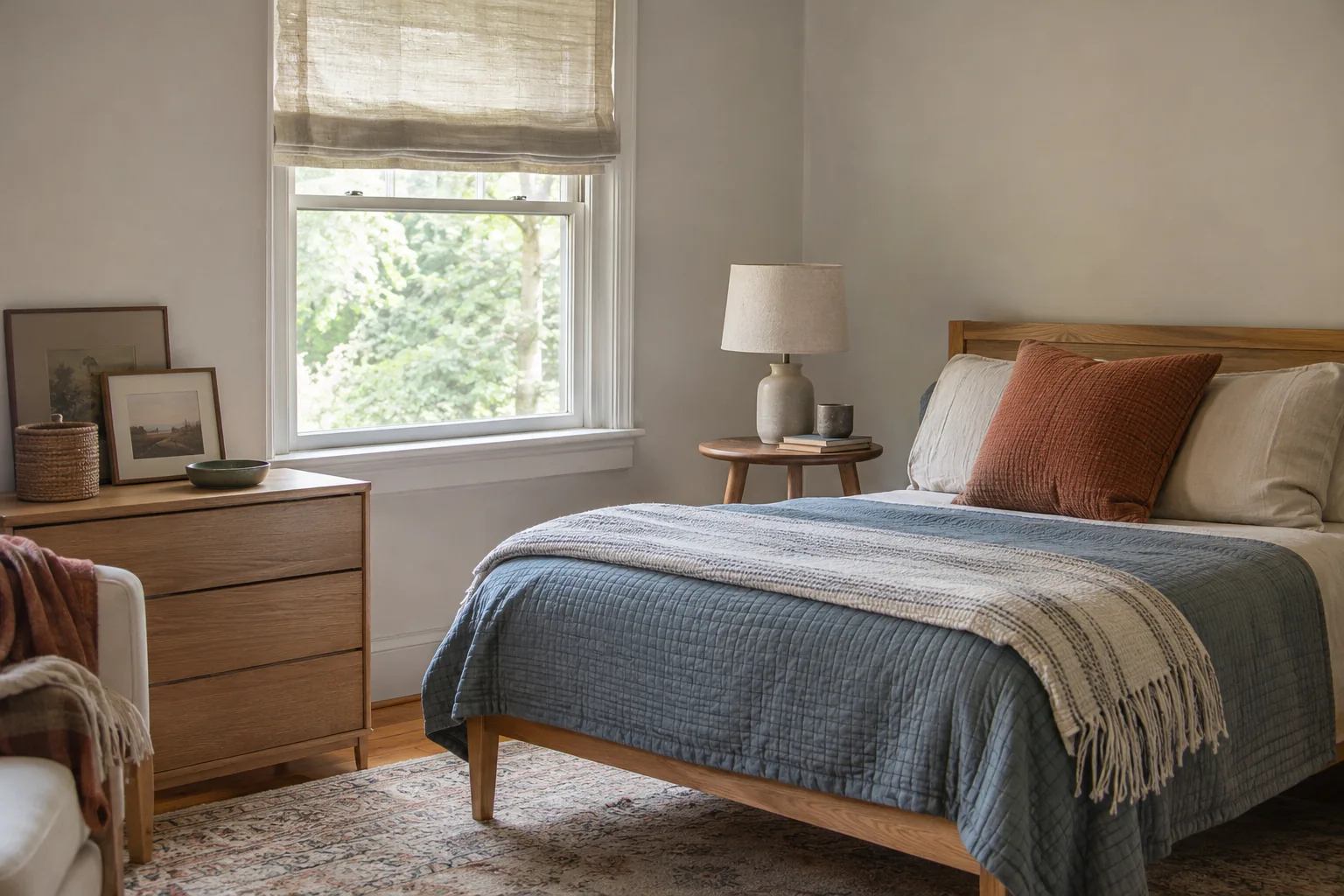
These are editorial layout suggestions, not firsthand furniture tests or measured plans for your room. The width example is hypothetical and gives no recommended walking clearance. The bedroom image is an illustrative design concept, not a demonstration of the three arrangements. Check your actual furniture and any manufacturer requirements.
Sources & details
- Nightstands: choosing surface area for bedside belongings ↗ · IKEA US, checked 2026-11-11
Design concepts use generated imagery. How we make Apartmentwise · Suggest a correction