Small Spaces
A living room that makes room for work
A few smart moves to create a comfortable, productive setup—without giving up your living space.
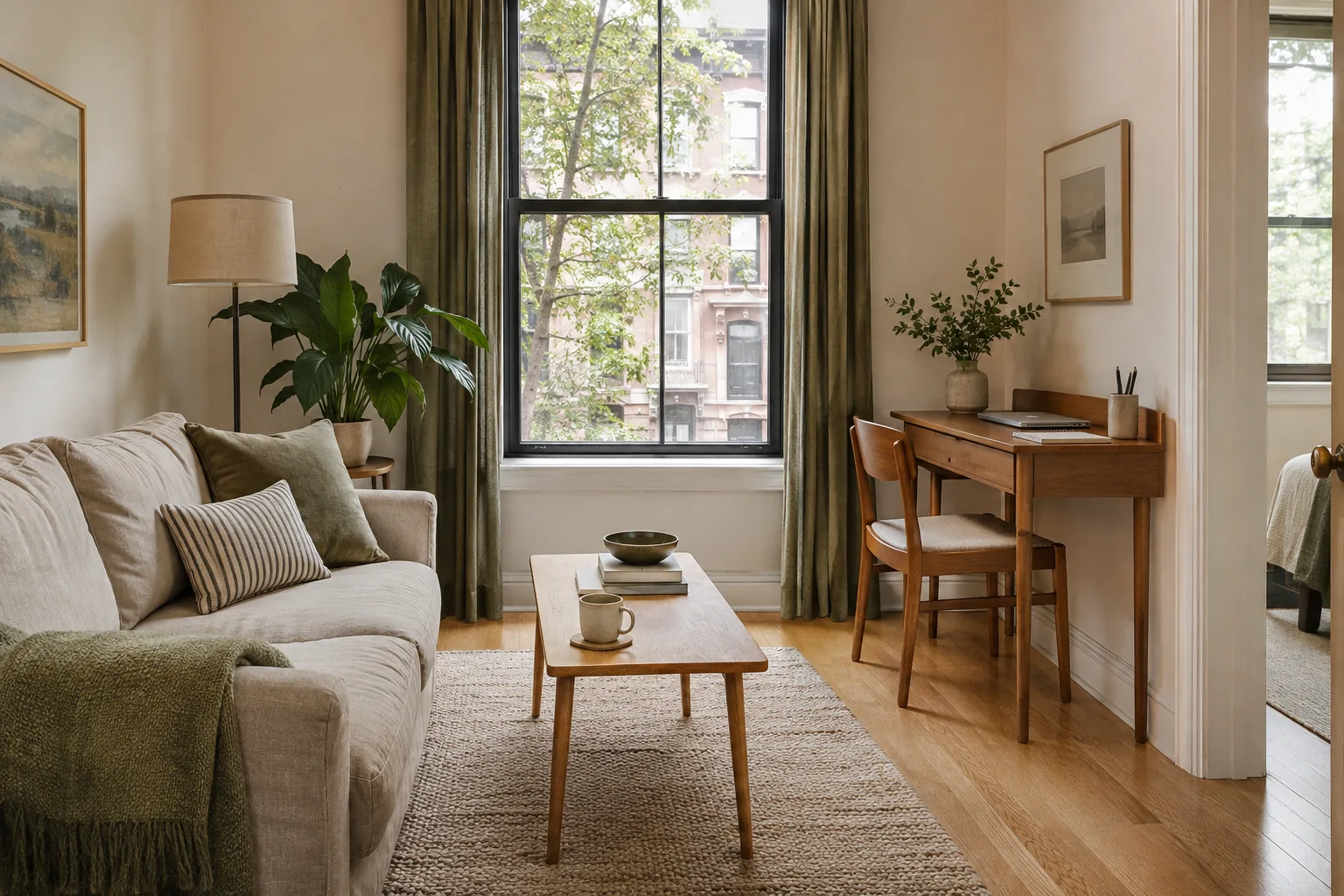
A living room office works best when it has an edge. That might be the end of a wall, the space beside a window, or a small surface that belongs to work and nothing else. Start by deciding what the room needs to do after the laptop closes. The sofa should still be somewhere you want to sit, and the path through the room should feel obvious.
Choose the edge before the desk
Look for a place where you can sit without turning the main route into an obstacle course. A desk beside a window can be a useful starting point, but check the screen at the time of day you actually work. A reflection that looks harmless on a cloudy morning can become the whole screen later.
Keep the view from the sofa in mind. A narrow desk with a finished back may suit a shared room better than a deep office unit filled with visible equipment.
Mock up the whole work area
Use paper or a spare box to stand in for the surface. Pull out your existing chair and sit with the equipment you use. Check leg space, reach, and whether another person can pass. A slim console may look right but be too shallow for your screen and keyboard.
For screen placement, OSHA recommends keeping the monitor in front of you and orienting it to reduce window glare. Use its workstation checklist rather than treating an attractive room picture as ergonomic proof.
Give the workday a closing routine
Set aside a shelf or lidded box for your keyboard, notes, and headset. Put tomorrow’s first task on a single page before you pack away. This makes a compact setup easier to return to without leaving the whole room in work mode.
Try the arrangement for several days before buying more furniture. If you keep moving the chair to reach a cupboard, change the layout first. More storage will not fix an awkward route.
Laptop day, monitor day
For a laptop-only session, try your normal notebook, mouse and drink on the temporary desk. For a separate-monitor setup, add the monitor’s actual base and a keyboard-sized sheet of paper. If the keyboard reaches the edge before you have usable screen space, the console is not deep enough for that setup. Moving the mouse to the sofa is a sign to change the surface, not squeeze harder.
These are editorial arrangements, not measured plans or firsthand product tests. Check your actual space, lease permissions, product instructions and clearances.
Sources & details
- Computer Workstations: monitors and workstation setup ↗ · Occupational Safety and Health Administration, checked 2026-11-10
Design concepts use generated imagery. How we make Apartmentwise · Suggest a correction