Renter-friendly design
How to Make a Rental Feel Like Home Without Losing the Deposit
A renter-safe decorating plan built around permission, measurements, removable layers, lighting, textiles, storage, and a clean exit.
Updated July 28, 2026 · 8 min read
By Apartmentwise · Editorial methodology
The short answer
Begin with the lease and written permission, then change what you own: textiles, lamps, art resting on furniture, plants, storage, and removable pieces tested in an inconspicuous spot. Treat every adhesive and wall system as surface-specific—not automatically deposit-safe.
Decorate in layers
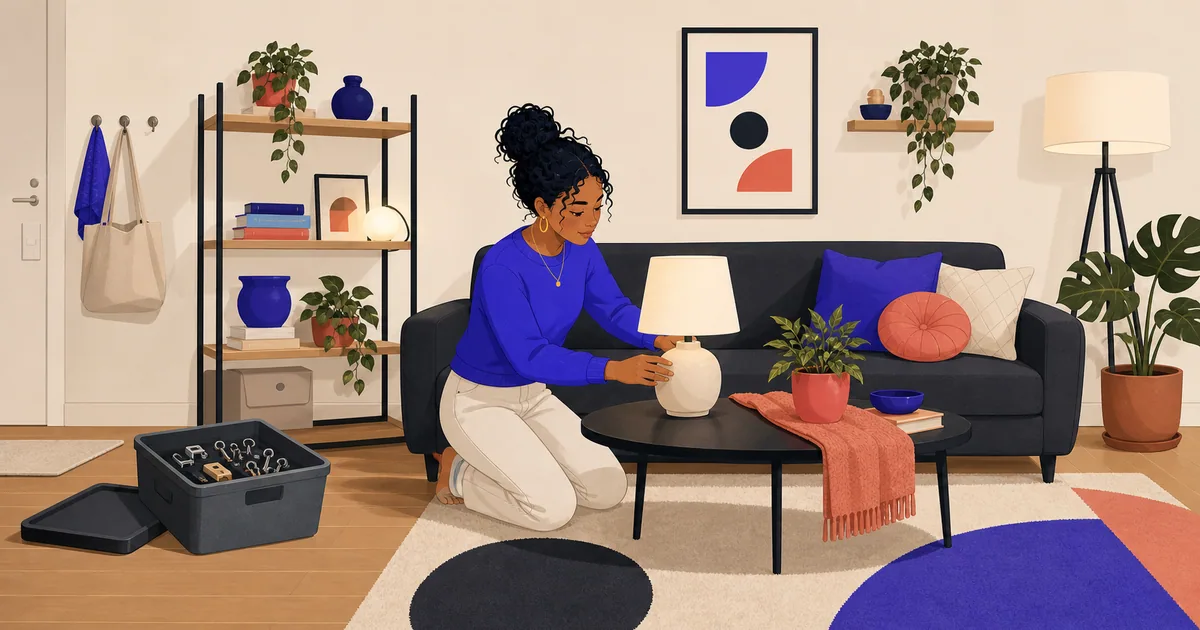
Rugs, curtains, bedding, lamps, art, plants, and movable storage can change a room without altering building systems.
Test every removable claim
Paint age, humidity, texture, sunlight, and removal technique can make an adhesive damage one wall but not another.
Keep the exit plan
Save original hardware, permissions, product instructions, and move-in photos so restoration is not guesswork.
Start with permission and surfaces
- Read rules for paint, holes, curtains, blinds, doors, balconies, fire sprinklers, and exterior appearance.
- Ask in writing before replacing hardware or mounting anything.
- Identify drywall, plaster, tile, veneer, masonry, and painted wood before choosing a method.
- Do not attach items to alarms, sprinklers, radiators, pipes, vents, windows, or electrical equipment.
High-impact, low-alteration changes
- Use a rug sized to define the seating or sleeping zone.
- Add multiple lamps using safe outlets instead of relying only on overhead light.
- Repeat two or three colors across washable textiles.
- Use freestanding shelves or closed bins that fit measured space and do not block egress.
- Lean or tabletop-display art where wall mounting is uncertain.
- Choose plants based on actual light and pet safety.
The removable-product reality check
No adhesive is universally damage-free. Test the exact product on the exact surface for the manufacturer’s minimum period, stay within weight limits, and remove exactly as instructed.
- Avoid adhesive on peeling, damp, freshly painted, textured, papered, or heat-exposed surfaces.
- Do not use peel-and-stick products over damaged tile, grout, counters, or flooring.
- Stop if paint lifts, the surface softens, or moisture collects.
Document the transformation
- Keep move-in photos separate from decorating photos.
- Label and store original screws, shades, handles, and hardware.
- Record written permission and approved paint colors.
- Remove additions early enough to address residue or request guidance before move-out.
Keep planning
Related renter guides
What should a first-time renter buy?
A practical first-apartment checklist focused on safety, small emergencies, food storage, laundry, and renter-friendly upkeep.
Open guide →
Move out without losing the paper trail
Plan notice, cleaning, repairs, photos, keys, utilities, and deposit follow-up without assuming every charge or deadline is the same locally.
Open guide →
Small apartment. Good party. No feud.
Plan guest count, seating, food, noise, building rules, cleanup, and the graceful ending of a gathering in limited space.
Open guide →