Social apartment guide
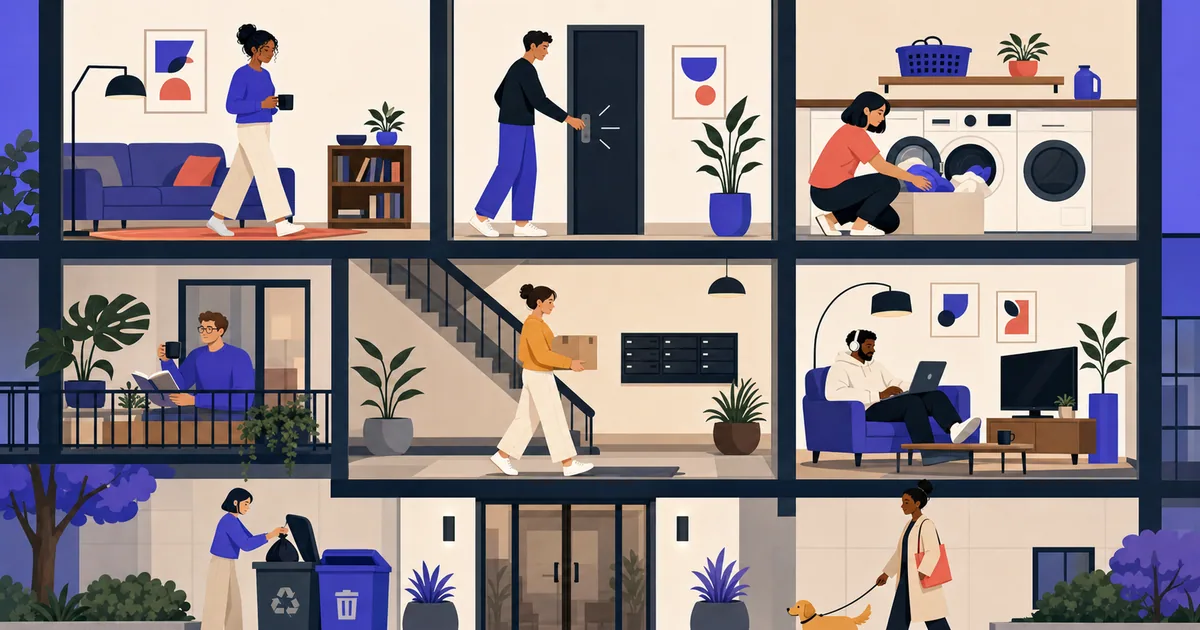
The Unwritten Rules of Apartment Living
A practical etiquette guide for footsteps, doors, hallways, laundry, packages, trash, pets, balconies, guests, and normal shared-building life.
Updated July 28, 2026 · 8 min read
By Apartmentwise · Editorial methodology
The short answer
Good apartment etiquette means reducing avoidable impact without pretending ordinary life is silent. Control doors, bass, hallway clutter, laundry timing, trash, pets, guests, smoke, and shared-space behavior—while allowing neighbors to walk, shower, cook, and live.
Normal noise exists
Footsteps, plumbing, doors, and occasional dropped objects are part of attached living; sustained or amplified noise is different.
Common space is not storage
Shoes, bikes, trash, furniture, packages, and decorations can obstruct access, egress, and cleaning.
Address patterns, not personalities
A specific request about bass after midnight is easier to solve than calling someone inconsiderate.
Inside your apartment
- Keep speakers and subwoofers off shared walls and floors; reduce bass before overall volume.
- Use rugs and pads where the lease permits, but do not promise soundproofing.
- Close doors and cabinets rather than slamming them.
- Tell guests the building rules and keep gatherings inside your unit.
- Use appliances, exercise equipment, and furniture assembly at reasonable times.
Hallways, stairs, elevators, and doors
- Do not prop secured or fire-rated doors.
- Keep shoes, mats, carts, bikes, strollers, trash, and deliveries out of required paths unless the building explicitly provides storage.
- Take speakerphone calls and long conversations inside.
- Let passengers exit elevators before entering.
- Report spills, broken lights, and doors that do not latch.
Laundry, trash, packages, and pets
- Move laundry promptly and follow posted machine hours.
- Clean lint, detergent spills, and pet waste.
- Break down boxes and use the correct trash or recycling room.
- Do not take, relocate, or open another tenant’s package.
- Use a leash and manage barking or door-rushing; follow pet and assistance-animal rules.
When etiquette becomes conflict
Start with the smallest safe intervention: a friendly factual request when the person is approachable, then a written note or management report when the pattern continues. Skip direct contact when there are threats, harassment, stalking, violence, or a reason to fear retaliation.
Keep planning
Related renter guides
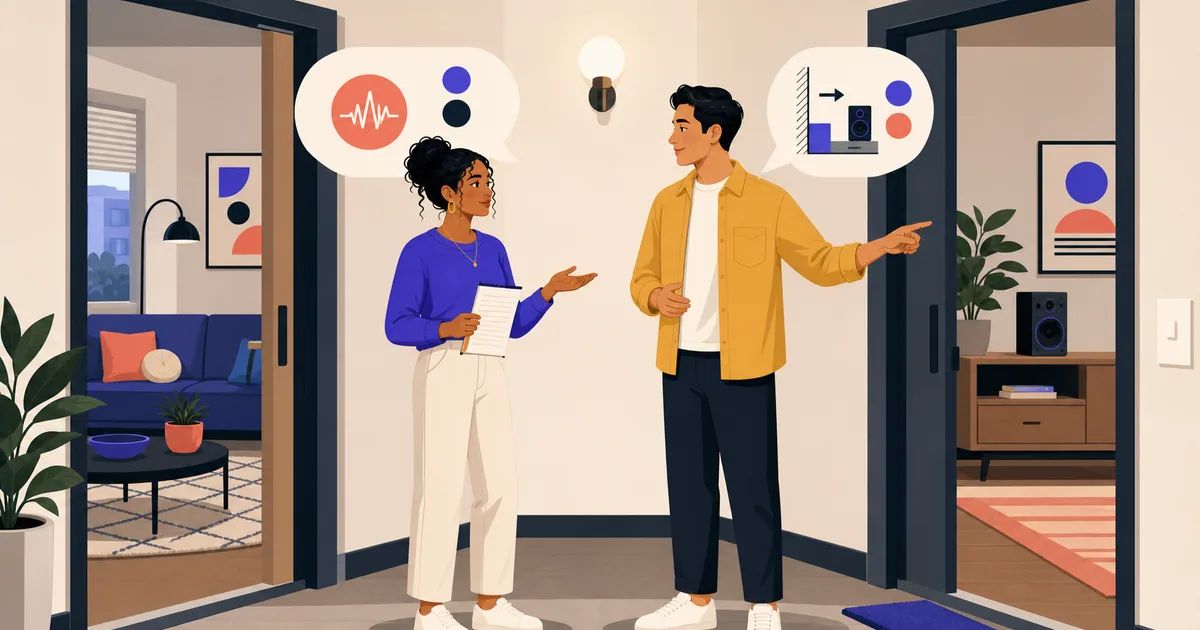
Resolve neighbor conflict without escalating it
Choose between a calm conversation, neutral note, documentation, mediation, management, and urgent help based on the behavior and safety risk.
Open guide →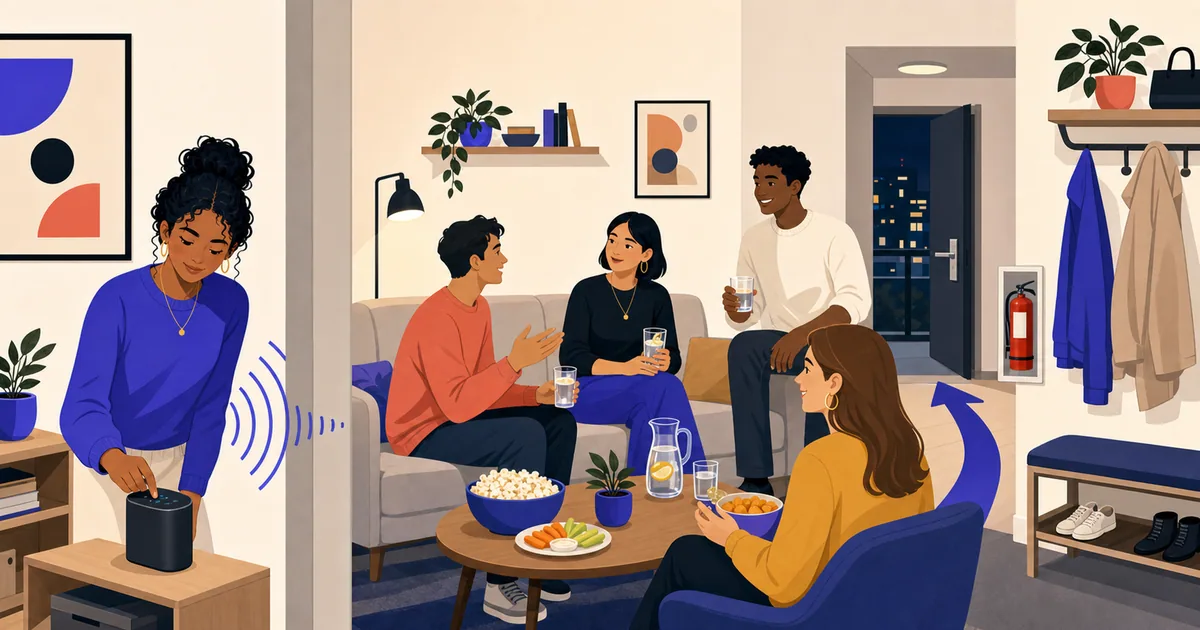
Small apartment. Good party. No feud.
Plan guest count, seating, food, noise, building rules, cleanup, and the graceful ending of a gathering in limited space.
Open guide →
The roommate talk to have before move-in
Cover rent, utilities, chores, guests, noise, food, pets, privacy, conflict, and early move-out before assumptions become arguments.
Open guide →