Neighbor conflict guide
How to Resolve Conflict With Apartment Neighbors
Choose between a calm conversation, neutral note, documentation, mediation, management, and urgent help based on the behavior and safety risk.
Updated July 28, 2026 · 10 min read
By Apartmentwise · Editorial methodology
The short answer
For a low-risk, specific problem, make one calm request that describes the behavior, timing, impact, and a realistic change. If the pattern continues, document facts and use management or mediation. Skip direct confrontation when there are threats, harassment, violence, stalking, discrimination, or a meaningful safety concern.
Choose safety first
Direct conversation is optional, not a required step when the person or situation feels unsafe.
Make a solvable request
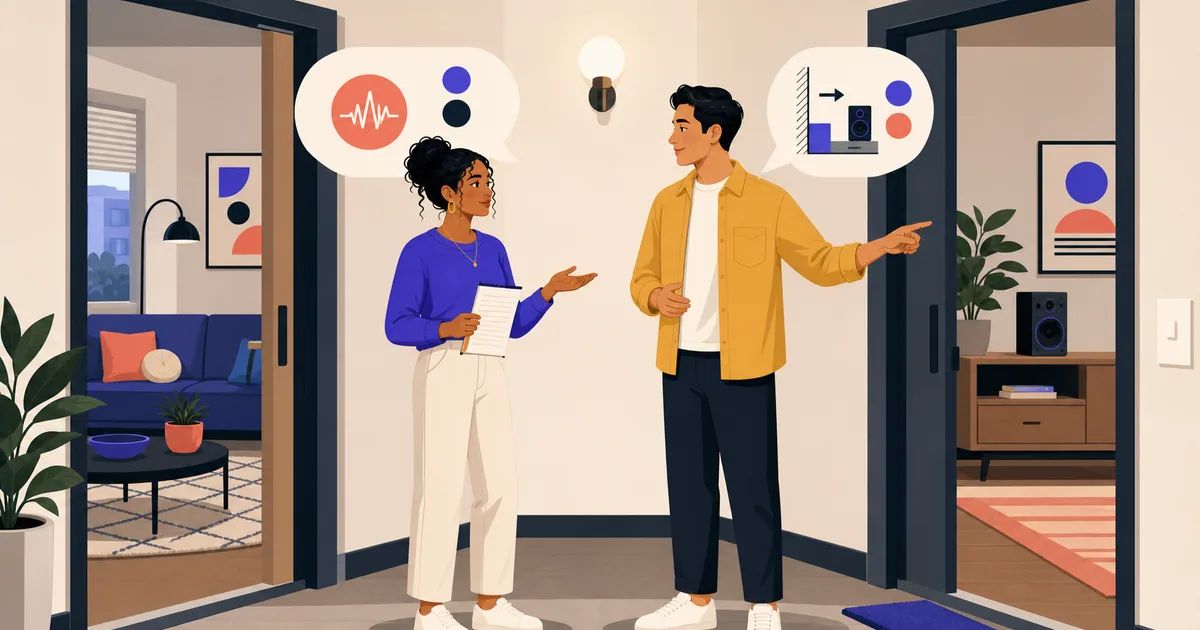
Ask for one behavior change—such as moving a speaker from the shared wall—rather than demanding that a neighbor change personality.
Escalate proportionally
Move from conversation to writing, management, mediation, local enforcement, or emergency help based on severity and repetition.
Decide whether direct contact fits
A friendly conversation works best for ordinary noise, laundry timing, package mistakes, doors, pets, parking, smoke, or shared-space misunderstandings when both people can speak safely.
- Choose daytime or early evening, not the middle of an incident.
- Meet in a neutral visible place or write instead of knocking if that feels safer.
- Do not approach someone who appears intoxicated, enraged, armed, or violent.
- For harassment, stalking, threats, discrimination, or domestic violence, preserve evidence and seek qualified help.
Use the behavior-impact-request script
“Hi, I’m in apartment [number]. I’ve been hearing [specific behavior] around [time/place], and it is [specific impact]. Would you be willing to [realistic request]? If there’s something from my apartment bothering you, please tell me too.”
- Keep the first interaction brief.
- Avoid labels such as rude, crazy, selfish, or always.
- Do not threaten management, police, eviction, or social-media exposure.
- Listen for a building problem—thin floors, a broken closer, shared plumbing—rather than assuming intent.
A neutral note when conversation is not practical
“Hello—this is your neighbor in [unit]. Sound from [music/TV/door/equipment] has been carrying into my apartment around [times]. Would you please [reduce bass/move the speaker/close the door gently] after [time]? I wanted to ask directly before involving management. Thank you.”
Check local rules before acting
Do not include accusations, personal information, insults, legal threats, or a demand that the neighbor contact you privately. Keep a copy.
Document a recurring pattern
- Date, start and end time, location, observable behavior, and effect.
- A short recording from inside your own apartment when lawful and useful.
- Copies of notes, messages, management reports, and reference numbers.
- Witnesses who independently experienced the issue.
- Lease clauses or building notices relevant to the behavior.
Move beyond direct contact
- Ask management for a specific operational response, such as checking a door closer, enforcing quiet hours, inspecting smoke pathways, or contacting both units.
- Ask whether the landlord or a local community organization offers voluntary mediation.
- Use the appropriate city service for sustained code, noise, smoke, waste, pest, or property-standard issues.
- Contact emergency services for violence, active threats, fire, medical emergencies, or immediate danger.
- Seek local legal or fair-housing help for harassment, retaliation, stalking, discrimination, or unresolved serious interference.
What a workable agreement looks like
A useful outcome is specific enough to test: speakers off the shared wall, no laundry after a stated hour, a mat inside rather than in the hall, text before a noisy project, guests remaining inside, or management repairing the closer. Agreement does not require friendship—only a livable pattern.
Keep planning
Related renter guides
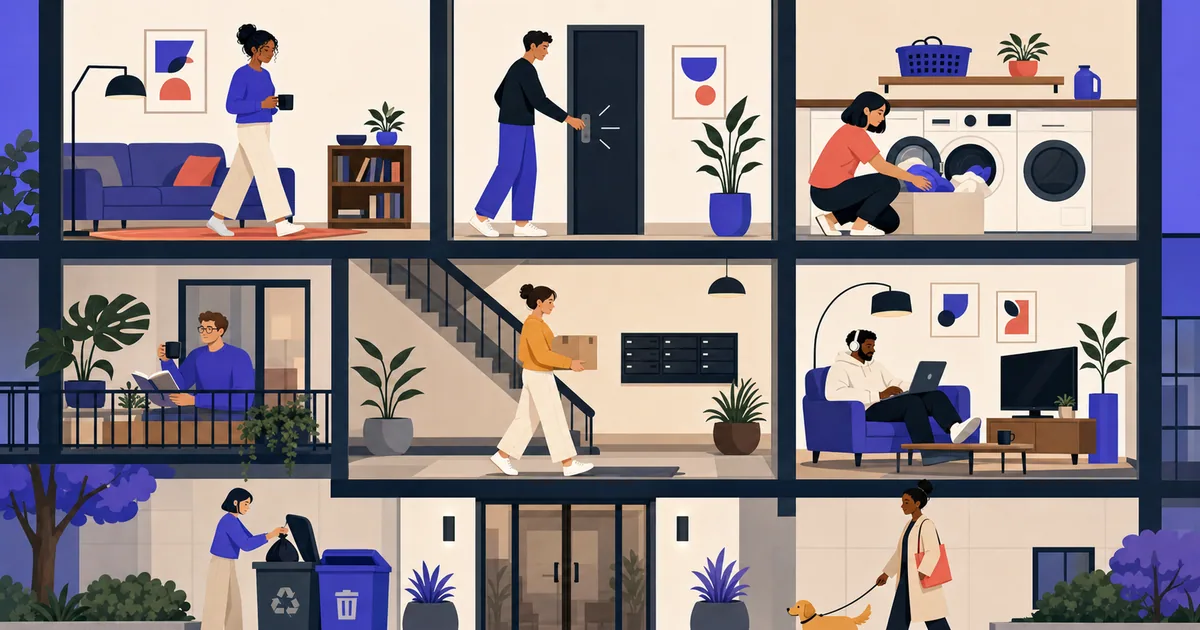
The unwritten apartment rules
A practical etiquette guide for footsteps, doors, hallways, laundry, packages, trash, pets, balconies, guests, and normal shared-building life.
Open guide →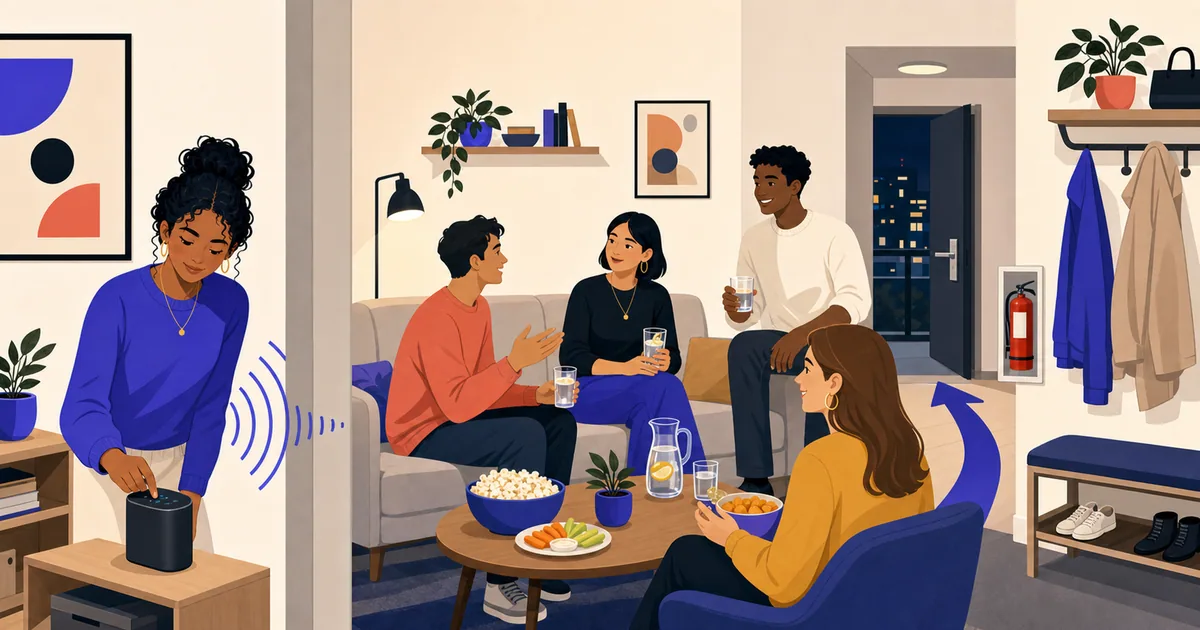
Small apartment. Good party. No feud.
Plan guest count, seating, food, noise, building rules, cleanup, and the graceful ending of a gathering in limited space.
Open guide →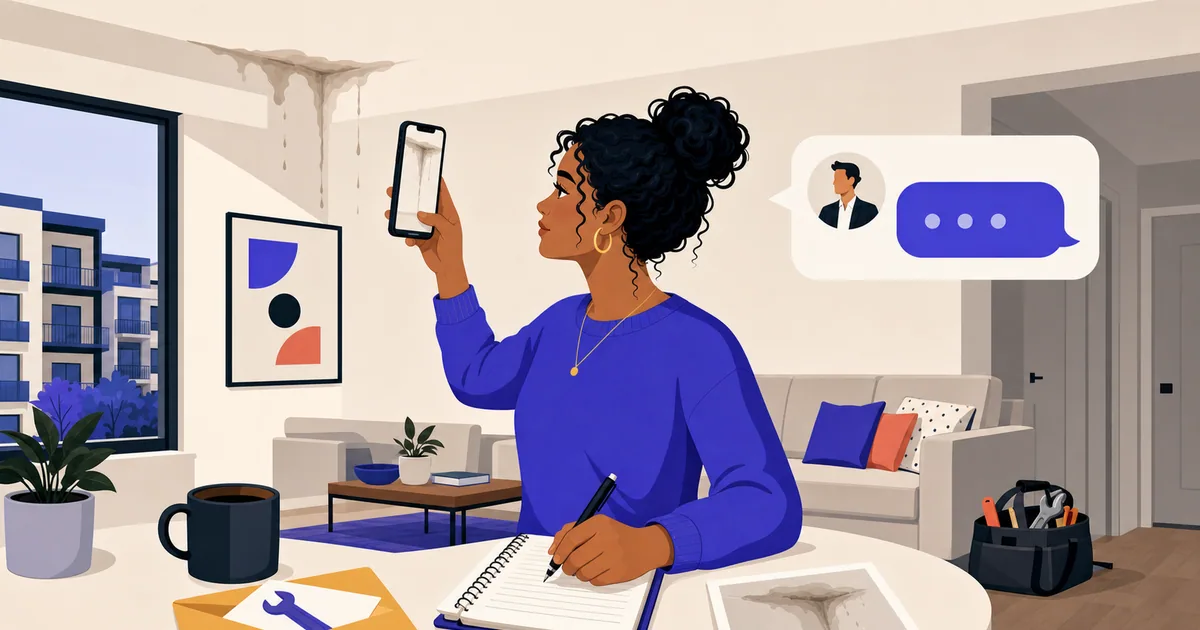
Landlord harassment or ignored repairs
A calm documentation and escalation plan for harassment, unsafe conditions, and maintenance requests that go nowhere.
Open guide →