Renter action guide
Dealing With a Difficult Landlord
A calm documentation and escalation plan for harassment, unsafe conditions, and maintenance requests that go nowhere.
Updated July 21, 2026 · 8 min read
By Apartmentwise · Editorial methodology
The short answer
Move important communication into writing, keep a dated evidence file, follow the notice process in your lease, and escalate through the appropriate local housing agency or legal-aid provider. If you are in immediate danger, prioritize safety and contact emergency services.
Document facts
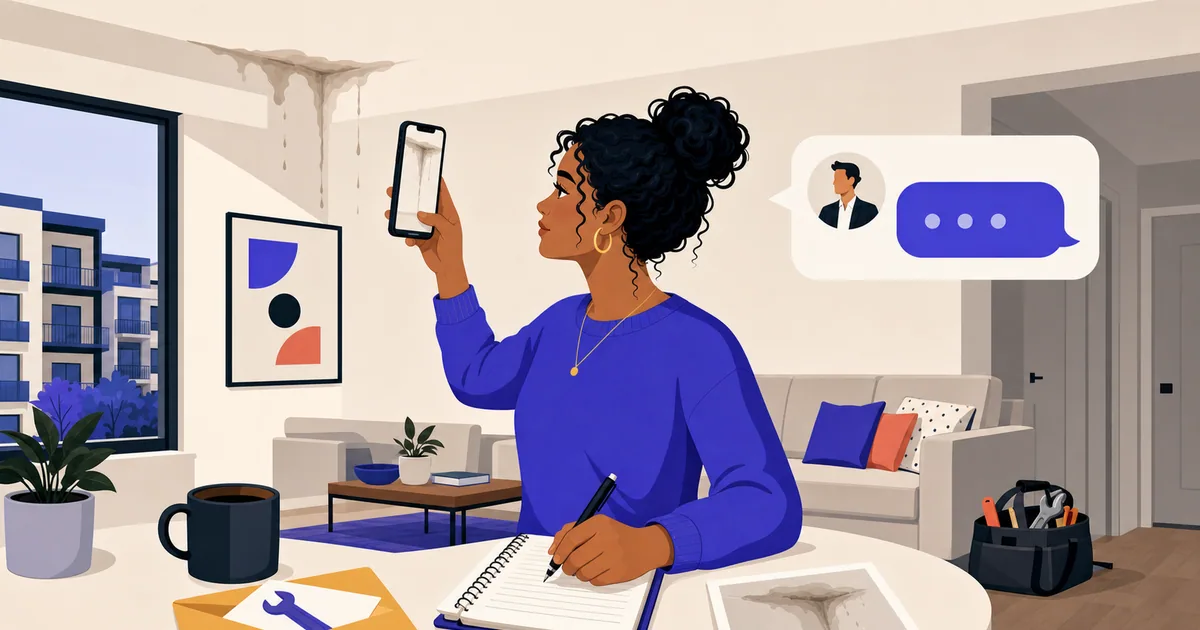
Keep dates, photos, videos, notices, work-order numbers, and copies of every message in one place.
Use the right channel
Send repair notices through the method named in your lease, then preserve proof of delivery.
Escalate locally
Entry, repair, retaliation, and rent-remedy rules vary by state and city; local help matters.
First, separate urgency from frustration
A landlord can be rude or unresponsive without every interaction becoming a legal violation. Focus your record on specific conduct, dates, conditions, promises, and effects on your ability to safely use the home.
- For fire, gas odor, active violence, or immediate danger, leave the area if needed and call the appropriate emergency service.
- For an urgent habitability issue, use the property's emergency maintenance channel and follow with a written record.
- For repeated unwanted entry, threats, sexual conduct, discrimination, or retaliation, preserve evidence and seek qualified local help promptly.
Build a maintenance paper trail
Describe what you can observe rather than diagnosing the building. A useful notice identifies the location, when the issue began, how often it occurs, any immediate safety impact, and reasonable access times.
- Take wide and close photos; preserve original files and dates.
- Submit through the lease-required portal, email, or written-notice address.
- Save confirmation numbers and summarize phone calls in a follow-up email.
- If the condition changes, send a concise update rather than starting an unrelated thread.
- Keep rent-payment records and the current lease with the same file.
A message you can adapt
Subject: Written repair request for [condition] in apartment [number]. I first noticed [specific condition] on [date] in [location]. It is currently affecting the apartment by [observable impact]. I reported it through [channel] on [date], reference [number]. Please confirm when it will be inspected and the expected repair timeline. I can provide access at [times]. Photos are attached. Please reply in writing so I can keep an accurate record.
When the response goes nowhere
- Re-read the lease's notice and escalation provisions and send a dated follow-up.
- Look for your city or county housing/code-enforcement office and official tenant-rights materials.
- If you receive HUD assistance, contact your public housing agency or the relevant HUD complaint channel.
- Use the Legal Services Corporation locator to find a local nonprofit legal-aid organization if you qualify.
- For discrimination tied to a federally protected characteristic, or covered harassment, review HUD's Fair Housing complaint process.
Harassment, discrimination, and unwanted entry
Federal fair-housing law prohibits housing discrimination because of race, color, national origin, religion, sex, familial status, and disability. HUD also states that sexual harassment by a landlord, maintenance worker, or property associate is illegal. Other harassment, notice-of-entry, recording, and retaliation rules may depend on state or local law.
Check local rules before acting
Do not secretly record conversations, withhold rent, deduct repairs, change locks, or end a lease based only on general online guidance. Those remedies can have strict local requirements and serious consequences. Speak with a local tenant organization or lawyer first.
Keep planning
Related renter guides

Resolve neighbor conflict without escalating it
Choose between a calm conversation, neutral note, documentation, mediation, management, and urgent help based on the behavior and safety risk.
Open guide →
Move out without losing the paper trail
Plan notice, cleaning, repairs, photos, keys, utilities, and deposit follow-up without assuming every charge or deadline is the same locally.
Open guide →
Inspect an apartment before signing
A room-by-room renter checklist for water, pests, noise, safety, utilities, lease promises, and documentation before paying a deposit.
Open guide →